
Algirdas Avizienis

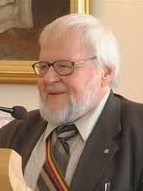
- (b.) 1932 July 08
Bio/Description
Organizer and director of the JPL STAR research project from 1961 to 1972, Avizienis is a Lithuanian-born computer scientist whose effort resulted in the construction and evaluation of the experimental JPL STAR (Self-Testing-And-Repairing) computer.
He was born in Kaunas, Lithuania, but his family immigrated to the United States in 1950, settling in Chicago, Illinois. He attended the University of Illinois, where he received his B.S. degree in 1954 and his M.S. degree in 1955 in Electrical Engineering, and his Ph.D. in 1960 in the field of Computer Science, completing a Ph.D. thesis that devised the class of "signed-digit" number systems for fast digital arithmetic. From 1956 to 1960, Avizienis was associated with the Digital Computer Laboratory at the University of Illinois as a Research Assistant and Fellow, participating in the design of the ILLIAC II computer.
In 1960 he joined the Spacecraft Computers section of the Jet Propulsion Laboratory (JPL), California Institute of Technology, and initiated research on reliability of computing systems that originated the concept of "fault tolerance," first described in a paper presented at the 1967 Fall Joint Computer Conference. He organized and directed the JPL STAR research project from 1961 to 1972. This effort resulted in the construction and evaluation of the experimental JPL STAR (Self-Testing-And-Repairing) computer, for which Avizienis received U.S. Patent No. 3,517,171, "Self-Testing and Repairing Computer," granted on June 23, 1970 and assigned to NASA. A paper that described the JPL STAR computer won the Best Paper selection of the IEEE Transactions on Computers in 1971. In 1969, JPL began designing a Thermoelectric Outer Planet Spacecraft, or TOPS (Voyager 1 and Voyager 2 missions). Outer planet missions ranged so far from the sun that solar cells would be inadequate, and TOPS would carry radioisotope thermoelectric generators to provide electrical power. STAR was considered as the on-board computer for TOPS, and components built to STAR specifications later found their way into the NASA Standard Spacecraft Computer 1 (NSSC-1).
He joined the University of California in Los Angeles (UCLA) faculty in 1962, where he led the research laboratories. Avizienis has served as Professor and Director of the Dependable Computing and Fault-Tolerant Systems Laboratory in the Computer Science Department at UCLA, where from 1972 he served as Principal Investigator of continuing research projects on fault-tolerant computing and system architectures, supported by about $4 million in grants from the U.S. Government, the State of California, and industry. He served as Chairman of the UCLA Computer Science Department from 1982 to 1985. In addition to his administrative and scientific work, Avizienis led the Department of Computer Science. His teaching and research interests have been in computer system architecture, digital arithmetic, and fault-tolerant computing, especially software fault tolerance, fault-tolerant distributed system architectures, and design methodology for fault-tolerant systems. He taught courses in computer system architecture, computer arithmetic, fault-tolerant systems, and software fault tolerance. Avizienis supervised 27 Ph.D. dissertations and 30 M.S. theses, and has been the author or coauthor of over 120 publications in these fields of study.
He has been a Fellow of the IEEE Computer Society, and as a member he founded and served as the first Chairman of the Technical Committee on Fault-Tolerant Computing (1969–1973), and was the organizer and General Chairman of the First International Symposium on Fault-Tolerant Computing in 1971. Avizienis also served for four years (1971–1974) as a member of the Governing Board of the IEEE Computer Society. In international activities, he served as the founding Chairman of the Working Group 10.4 on "Reliable Computing and Fault Tolerance" of the International Federation for Information Processing (IFIP) from 1980 to 1986.
He received the annual IEEE Computer Society Technical Achievement Award in 1985 and the IFIP Silver Core Award in 1986. Avizienis also received the 1979 AIAA Information Systems Award and the 1980 NASA Exceptional Service Medal. He lectured and conducted joint research at the National Polytechnic Institute of Mexico, the University of Sao Paulo, Brazil, the Laboratoire d'Automatique et d'Analyse des Systemes (LAAS) in Toulouse, France, Keio University in Tokyo, Japan, the Innovative Computer Systems Center of the Technical University of Berlin, ERG, and the Microelectronics Research Institute in Lintong, People's Republic of China.
In 1974 he spent a five-month research visit, sponsored by the U.S. National Academy of Sciences, at the Institute of Mathematics and Cybernetics of the Lithuanian Academy of Science in Vilnius, Lithuania, where he had also made six shorter research visits since 1968. From August 1990 to February 1993, Avizienis served as the first Rector of the Vytautas Magnus University of Kaunas, Lithuania, after it was reopened in 1989. The university was the former National University of Lithuania, established in 1922 and closed by the Soviet government in 1950. The Senate of Vytautas Magnus University awarded him the title of Professor Honoris Causa in 1994. He has also served as President of A. Avizienis and Associates, Inc., a consulting firm specializing in dependable computing and fault-tolerant system design.
Citations:
-
Date of Birth:
1932 July 08 -
Gender:
Male -
Noted For:
Organizer and director of the JPL STAR research project from 1961 to 1972 which effort resulted in the construction and evaluation of the experimental JPL STAR (Self-Testing-And-Repairing) computer -
Category of Achievement: