
Charles (Charlie) William Bachman

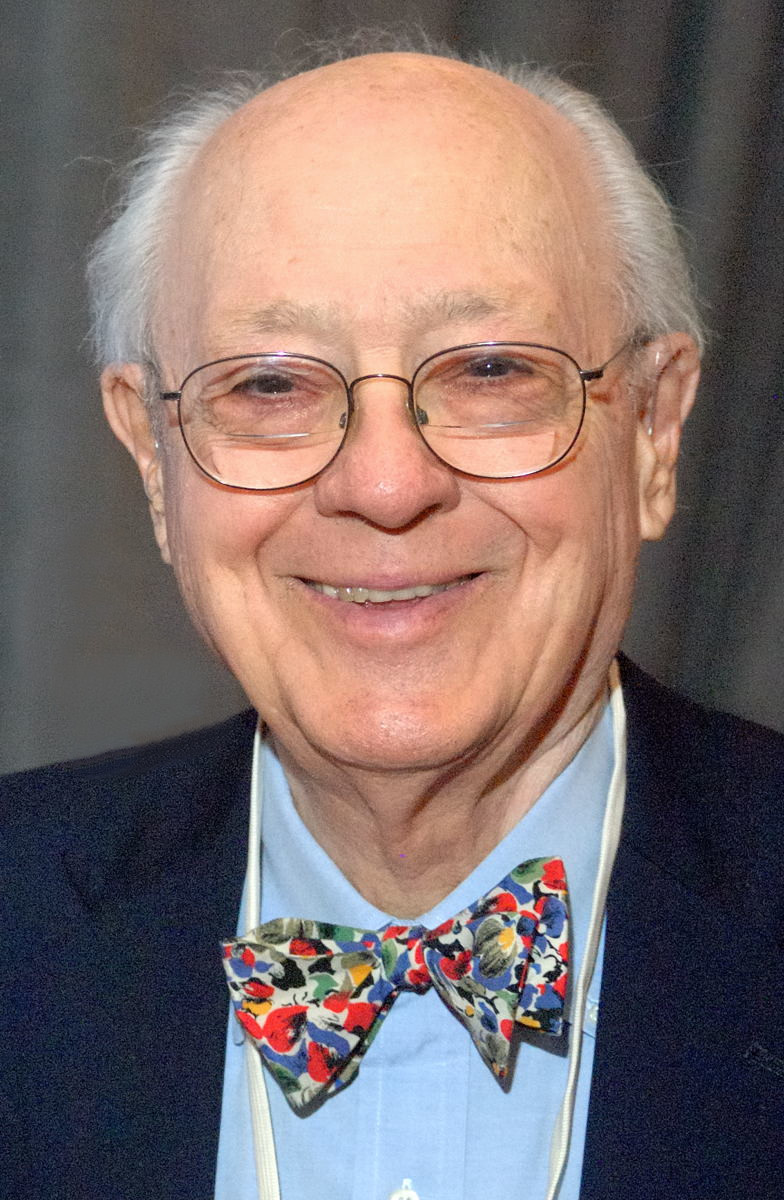
- (b.) 1924 December 11 - (d.) 2017 July 13
Bio/Description
Pioneer of database technology, Bachman spent his entire career as an industrial researcher rather than in academia.
Born in Manhattan, Kansas, in 1924, Bachman's father was a football coach and minor league baseball manager. Charlie grew up in several Midwestern states and then attended Michigan State University, where he studied mechanical engineering. His studies were interrupted by service in World War II, during which he served in the Pacific theater as an antiaircraft artillery officer. He returned to Michigan State after the war and completed his degree in 1948.
He then joined Dow Chemical in Midland, Michigan, where he worked on early computing applications. In 1950, Bachman moved to Louisville, Kentucky, to work for General Electric's appliance division. He worked on production planning and control systems, which drew him deeper into computing. It was here that he developed an interest in data management, which would define the rest of his career.
In the early 1960s, working at GE's computer department in Phoenix, Arizona, Bachman designed and built the Integrated Data Store (IDS)—one of the first database management systems. IDS introduced the concept of the network data model, which allowed data to be stored and retrieved in a flexible, interconnected way. This work was foundational to the development of database technology as a discipline.
Bachman's contributions were recognized by the broader computing community when CODASYL—the Conference on Data Systems Languages—adopted his network model as the basis for its database specifications. He served on the CODASYL Data Base Task Group (DBTG), which published its influential report in 1971. The DBTG report shaped database standards for years to come.
In 1973, Bachman received the ACM Turing Award—computing's highest honor—for his pioneering work on databases. His Turing Award lecture, titled "The Programmer as Navigator," described the database as a new medium through which programmers could navigate, rather than simply process sequential data. The lecture is still regarded as a landmark statement in the history of computing.
After GE, Bachman held positions at Honeywell and then co-founded his own company, Cullinet Software, which commercialized database technology based on his earlier work. He later worked at Kohler Company and then at a series of smaller technology firms. Throughout this period, he continued to contribute to standards efforts, including work on the ISO OSI network architecture in the 1980s.
He received numerous honors in addition to the Turing Award, including election to the National Academy of Engineering. Bachman remained active in the computing community well into later life, attending conferences and engaging with researchers who carried forward the field he had done so much to create.
Citations:
-
Date of Birth:
1924 December 11 -
Date of Death:
2017 July 13 -
Gender:
Male -
Noted For:
His outstanding contributions to database technology -
Category of Achievement: