
Chieko Asakawa

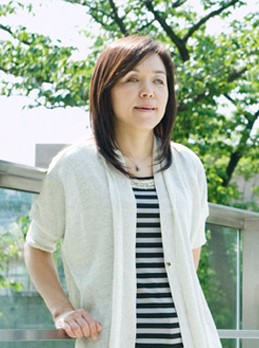
- (b.) 1958 August 31
Bio/Description
Co-developer of IBM software and applications that significantly improve web accessibility for the visually impaired by automatically converting text and icons on the screen to voice, Asakawa is a member of the IBM Academy of Technology and an IBM Fellow. Blind from the age of 14, she led by example, demonstrating that the impossible is never out of reach. Asakawa has been responsible for the research and development of IBM software and applications that significantly improved web accessibility for the visually impaired and others with special needs. Her contributions to the field of accessibility research included making the internet and other web resources available to the visually impaired via PCs by automatically converting text and icons on the screen to voice.
She joined IBM in 1985 after completing the computer science courses for the blind at Lighthouse Japan. Asakawa received a B.A. degree in English Literature from Otemon University in 1982, and a Ph.D. in Engineering from the University of Tokyo in 2004. Prior to assuming her role in 2000, she held research and development positions at the IBM Tokyo Research Lab, developing educational systems and user interfaces.
Her work used disability simulation and problem visualization features to help web designers and developers understand accessibility issues on their web-designed pages at a glance. She also researched how the visually impaired could access and represent various types of visual information non-visually using the hearing and touch senses. From summer 2008, Asakawa led the Social Accessibility project. Based on collaboration software developed by her team, it created an open, collaborative environment where blind users, developers, and sighted "supporters" worked together to solve real-life Web accessibility issues raised by blind users.
She developed a digital Braille system and three key applications for the visually impaired, including the Braille Editing System (BES), which allowed users to easily input and edit Braille using an ordinary keyboard and monitor. Asakawa also developed the Braille Dictionary System and the IBM Braille Forum Network. She promoted the electronic distribution of Braille materials over the IBM Braille Forum Network in collaboration with Braille libraries and schools for the visually impaired in Japan.
She and her team also developed a number of pioneering technologies, including a disability simulator called aDesigner, which helped Web designers identify potential design issues to make their websites more user-friendly to all, and a tool called aiBrowser, which for the first time helped visually impaired users to access streaming video, animation, and other visual online content. Asakawa and teams within IBM developed the Accessibility Tools Framework, which offered standardized design and application programming interfaces, allowing developers to create accessibility tools and applications easily and cost effectively. The contribution of these technologies and the framework to the open source community, Eclipse Foundation, helped stimulate assistive software innovation to advance Web 2.0 content accessibility.
She has served as a key technical leader in the development of the IBM Home Page Reader (HPR), a self-voicing web browser designed for people who are blind. It was produced in eleven languages and distributed worldwide. In 2006, it was announced on the HPR mailing list that IBM did not have plans for any further updates of HPR, and the software was subsequently withdrawn from sale by IBM in December 2006. It has been superseded by IBM Easy Web Browsing.
Her inventions are recognized in 10 patents, and Asakawa has contributed to numerous technical journals and papers. She also taught at Tsukuba Engineering College, focusing on human interface issues. She has been a member of the Institute of Electronics, Information and Communication Engineers of Japan, the Information Processing Society of Japan, and the Association for Computing Machinery (ACM). She has supported accessibility-related open standards efforts, and in 2010 served as co-general chair for the international conference for Web accessibility (W4A).
Asakawa was inducted into the Women in Technology International (WITI) Hall of Fame in 2003, and both within and outside of IBM, she has actively worked to help women engineers pursue technical careers. She was appointed to IBM Fellow in 2009, IBM's most prestigious technical honor.
Citations:
-
Date of Birth:
1958 August 31 -
Gender:
Male -
Noted For:
Co-developer of IBM software and applications that significantly improve web accessibility for the visually impaired and others with special needs by automatically converting text and icons on the screen to voice -
Category of Achievement: