
David Patrick Reed

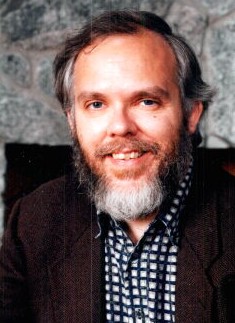
- (b.) 1952
Bio/Description
Designer of the User Datagram Protocol (UDP), Reed is an American computer scientist known for significant contributions to computer networking, including the design and construction of Internet protocols, distributed data storage, and PC software systems and applications. He is also the co-inventor of the end-to-end argument, often called the fundamental architectural principle of the Internet. He holds a B.S. in Electrical Engineering, as well as M.S. and Ph.D. degrees in Computer Science and Engineering from MIT.
As a student at MIT, he was involved in developing commercial implementations of MACLISP and MACSYMA. Before joining the commercial world at Software Arts in 1983, Reed served as an Assistant Professor of Computer Science and Engineering at the MIT Laboratory for Computer Science (now absorbed into CSAIL), where he helped to shape the early design of LANs and communication protocols. He participated in the design of the protocol suite now used in the Internet and also worked on systems architectures for confederated networks of interconnected personal computers. He also made major contributions to research on security and resource management in time-shared, multiprocessor computer systems as part of the Multics project.
He was involved in the early development of TCP/IP and was the designer of the User Datagram Protocol (UDP). Reed was also one of the authors of the original paper about the end-to-end principle, End-to-end arguments in system design, published in 1984. He is also known for Reed's Law, his assertion that the utility of large networks, particularly social networks, can scale exponentially with the size of the network. It was first cited in "The Law of the Pack," Harvard Business Review (February 2001) pp 23–4. Along with Metcalfe's Law, Reed's Law has significant implications for large-scale network business models.
In 2002 he was appointed an Adjunct Professor at the MIT Media Lab in the Viral Communications group. In 2001, Reed was one of six principal architects of the Croquet project (along with Alan Kay, Julian Lombardi, Andreas Raab, David A. Smith, and Mark McCahill). Croquet is a software development kit (SDK) for use in developing collaborative virtual world applications. The first working Croquet code was developed in January 2002. From 2003–2006 the technology was developed under the leadership of its six principal architects, and on April 18, 2006 the project released a beta version of the Croquet SDK 1.0 in the open source. The Croquet technology infrastructure was subsequently used by private industry to build and deploy commercial-grade closed source collaborative applications.
As a teacher, he helped develop undergraduate and graduate courses in computer and communication systems design, and programming language implementation and design. From 2003–2009, he also served as a part-time HP Fellow at HP Laboratories. He later joined SAP Labs, where he has served as Senior Vice President in the Chief Scientist Group.
In addition to his research roles, Reed has been active in the commercial world, acting as a strategic advisor to small and large technology-based businesses and as a consultant on advanced computing and communications technology. His primary consulting activities focused on businesses that wanted to capture or create value resulting from disruptive dispersion of network and computing technology into the spaces in which people and companies collaborate and partner. He also spent four years at Interval Research Corporation, exploring portable and consumer media technology.
For seven years prior to joining Interval, he served as Vice President and Chief Scientist for Lotus Development Corporation, where he led the design and implementation of key products, including 1-2-3, and guided its technology strategy. Prior to joining Lotus, Reed served as Vice President of Research and Development and Chief Scientist at Software Arts, the creator of VisiCalc — the first electronic spreadsheet. He also played a key role on the Advisory Board of the TTI/Vanguard research and advisory program, which was begun in 1991 by CSC Index and later became a part of the Technology Transfer Institute. He has also been a Fellow in the Diamond (formerly Diamond Technology Partners) DiamondExchange program. His personal research has focused on densely scalable, mobile, and robust RF network architectures and highly decentralized systems architectures, and he has continued to build and prototype home LANs and portable computer technology in his home laboratory.
Citations:
-
Date of Birth:
1952 -
Gender:
Male -
Noted For:
Designer of the User Datagram Protocol (UDP) -
Category of Achievement: