
Fernanda Bertini Viégas

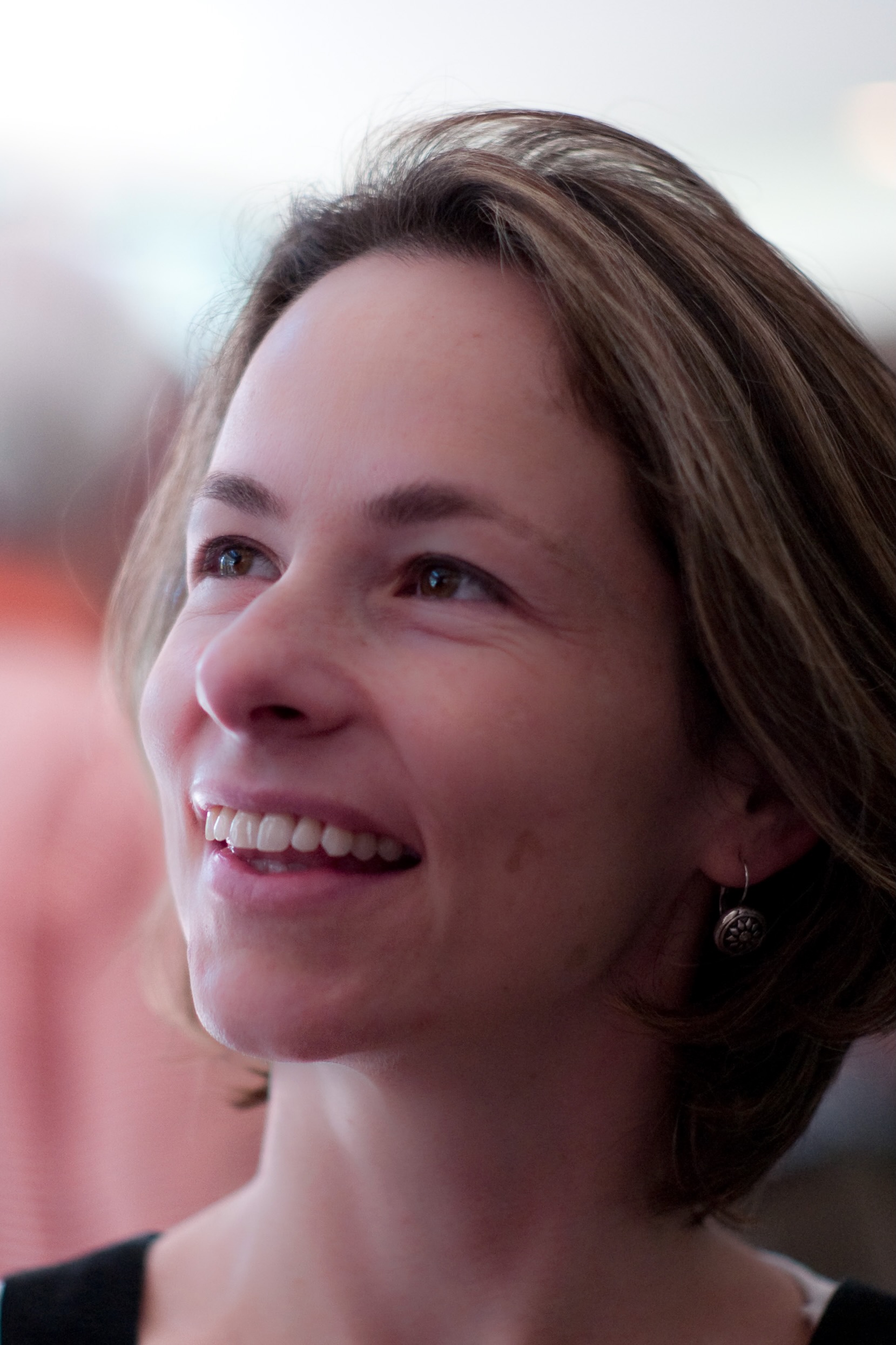
- (b.) 1971
Bio/Description
Co-creator of Many Eyes, the ground-breaking open public data visualization and analysis platform, Viégas is a Brazilian-born scientist and computational designer whose work focuses on the social, collaborative, and artistic aspects of information visualization. She received a Ph.D. in Media Arts and Sciences from the MIT Media Lab in 2005. While at MIT, she studied usage of Usenet and blogs. That same year she began work at the Cambridge, Massachusetts location of IBM's Thomas J. Watson Research Center as part of the Visual Communication Lab.
In April 2010, Viégas and Martin M. Wattenberg began a new venture called Flowing Media, Inc., to focus on visualization aimed at consumers and mass audiences. Four months later, both of them joined Google as the co-leaders of Google's "Big Picture" data visualization group in Cambridge, Massachusetts.
Viégas began her research while at the MIT Media Lab, focusing on graphical interfaces for online communication. Her Chat Circles system introduced ideas such as proximity-based filtering of conversation and a visual archive of chat history displaying the overall rhythm and form of a conversation. Her email visualization designs (including PostHistory and Themail) were the foundation for many other systems; her findings on how visualizations are often used for storytelling influenced subsequent work on the collaborative aspects of visualization.
A second stream of work, in her partnership with Wattenberg, centered on collective intelligence and the public use of data visualization. Her work with visualizations such as History Flow and Chromogram led to some of the earliest publications on the dynamics of Wikipedia, including the first scientific study of the repair of vandalism. Viégas was one of the founders of IBM's experimental Many Eyes website, created in 2007, which sought to make visualization technology accessible to the public. In addition to broad uptake from individuals, the technology from Many Eyes was used by nonprofits and news outlets such as the New York Times Visualization Lab.
She is also known for her artistic work, which explores the medium of visualization for explorations of emotionally charged digital data. An early example is Artifacts of the Presence Era, an interactive installation at the Boston Center for the Arts in 2003, which featured a video-based timeline of visitor interactions with the museum. Viégas has often worked with Wattenberg to visualize emotionally charged information. An example of these works is their piece "Web Seer", which is a visualization of Google's "Suggest" feature — an interesting insight into popular searches, that is, you start typing a search phrase and Google will suggest popular phrases based on recent queries.
The Fleshmap series (started in 2008) used visualization to portray aspects of sensuality, and included work on the web, video, and installations. In 2012, she launched the Wind Map project, which displays continuously updated forecasts of wind patterns across the United States.
She also wrote or co-wrote more than 30 academic papers, including, but not limited to: "Chat Circles" with Judith Donath, ACM Conference on Computer-Human Interaction (CHI), 1999; "Visualizing Conversations", with Judith Donath and Karrie Karahalios, Journal of Computer-Mediated Communication, Vol. 4, Number 4, June 1999; "Studying Cooperation and Conflict between Authors with history flow Visualizations" with Martin Wattenberg and Kushal Dave, ACM Conference on Computer-Human Interaction (CHI), 2004; and "Many Eyes: A Site for Visualization at Internet Scale" with Martin Wattenberg, Frank van Ham, Jesse Kriss, and Matt McKeon, IEEE Symposium on Information Visualization, 2007.
Citations:
-
Date of Birth:
1971 -
Gender:
Female -
Noted For:
Co-creator of the ground-breaking public visualization platform Many Eyes, an experiment in open, public data visualization and analysis -
Category of Achievement: