
Gregory Bateson

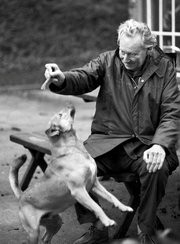
- (b.) 1904 May 09 - (d.) 1980 July 04
Bio/Description
A pioneer in extending systems theory and cybernetics to the social and behavioral sciences, Bateson had a natural ability to recognize order and pattern in the universe. In the 1940s he helped extend systems theory/cybernetics to the social/behavioral sciences, and spent the last decade of his life developing a "meta-science" of epistemology to bring together the various early forms of systems theory developing in various fields of science. Some of his most noted writings are to be found in his books, Steps to an Ecology of Mind (1972) and Mind and Nature (1979). Angels Fear (published posthumously in 1987) was co-authored by his daughter Mary Catherine Bateson.
Bateson was born in Grantchester in Cambridgeshire, England, and attended Charterhouse School from 1917 to 1921, obtained a BA in Biology at St. John's College, Cambridge in 1925, and continued at Cambridge from 1927 to 1929. He lectured in linguistics at the University of Sydney in 1928. From 1931 to 1937 he was a Fellow of St. John's College, Cambridge, and spent the years before World War II in the South Pacific in New Guinea and Bali doing anthropology. During 1936–1950 he was married to Margaret Mead, and at that time he applied his knowledge to the war effort before moving to the United States.
In Palo Alto, California, Bateson and his colleagues Donald Jackson, Jay Haley, and John H. Weakland developed the double bind theory. One of the threads that connects his work was an interest in the scientific paradigm of systems theory and cybernetics, which is the interdisciplinary study of the structure of regulatory systems and is closely related to information theory, control theory, and systems theory. As one of the original members of the core group of the Macy Conferences, he extended their application to the social/behavioral sciences. His take on these fields centered upon their relationship to epistemology, and this central interest provided the undercurrents of his thought.
His association with the editor and author Stewart Brand was part of a process by which his influence widened—for from the 1970s until his last years, a broader audience of university students and educated people working in many fields came not only to know his name but also into contact to varying degrees with his thought. In 1956, Bateson became a naturalized citizen of the United States. He was a member of William Irwin Thompson's Lindisfarne Association. In the 1970s, he taught at the Humanistic Psychology Institute in San Francisco (now Saybrook University) and also served as a lecturer and fellow of Kresge College at the University of California, Santa Cruz.
He was elected a Fellow of the American Academy of Arts and Sciences in 1976. In 1978, California Governor Jerry Brown appointed him to the Board of Regents of the University of California, in which position he served for the remainder of his life. Also in 1956, in Palo Alto, Bateson and his colleagues Donald Jackson, Jay Haley, and John Weakland articulated a related theory of schizophrenia as stemming from double bind situations.
In his book Steps to an Ecology of Mind, he applied cybernetics to the field of ecological anthropology and the concept of homeostasis. Bateson saw the world as a series of systems containing those of individuals, societies, and ecosystems. Within each system was found competition and dependency, and each of these systems had adaptive changes which depended upon feedback loops to control balance by changing multiple variables. He believed that these self-correcting systems were conservative by controlling exponential slippage. He saw the natural ecological system as innately good as long as it was allowed to maintain homeostasis, and held that the key unit of survival in evolution was an organism and its environment.
He also viewed all three systems of the individual, society, and ecosystem as together forming part of one supreme cybernetic system that controls everything, rather than merely interacting systems. This supreme cybernetic system is beyond the self of the individual and could be equated to what many people refer to as God, though Bateson referred to it as Mind. While Mind is a cybernetic system, it can only be distinguished as a whole and not in parts. He felt Mind was immanent in the messages and pathways of the supreme cybernetic system.
He saw the root of system collapses as a result of Occidental or Western epistemology. He stated that consciousness is the bridge between the cybernetic networks of individual, society, and ecology, and that the mismatch between the systems due to improper understanding would result in the degradation of the entire supreme cybernetic system, or Mind. Bateson saw consciousness as developed through Occidental epistemology as being at direct odds with Mind. At the heart of the matter, he identified scientific hubris.
He argued that Occidental epistemology perpetuated a system of understanding which was purpose- or means-to-an-end driven. Purpose controls attention and narrows perception, thus limiting what comes into consciousness and therefore limiting the amount of wisdom that can be generated from the perception. Additionally, Bateson argued that Occidental epistemology propagated the false notion that man exists outside Mind, which leads man to believe in what he called the philosophy of control, based upon false knowledge. He presented Occidental epistemology as a method of thinking that leads to a mindset in which man exerts an autocratic rule over all cybernetic systems.
In exerting his autocratic rule, man changes the environment to suit him, and in doing so unbalances the natural cybernetic system of controlled competition and mutual dependency. The purpose-driven accumulation of knowledge ignores the supreme cybernetic system and leads to the eventual breakdown of the entire system. Bateson claimed that man would never be able to control the whole system because it does not operate in a linear fashion, and that if man creates his own rules for the system, he opens himself up to becoming a slave to the self-made system due to the non-linear nature of cybernetics. Lastly, man's technological prowess combined with his scientific hubris gave him the potential to irrevocably damage and destroy the supreme cybernetic system, instead of merely disrupting it temporarily until the system could self-correct.
He argued for a position of humility and acceptance of the natural cybernetic system, rather than scientific arrogance, as a solution. He believed that such humility could come about by abandoning the view of operating through consciousness alone. Consciousness is only one way in which to obtain knowledge, and without complete knowledge of the entire cybernetic system, disaster is inevitable. The limited conscious, he held, must be combined with the unconscious in complete synthesis, and only when thought and emotion are combined as a whole is man able to obtain complete knowledge.
Bateson believed that religion and art were some of the few areas in which a man acted as a whole individual in complete consciousness. By acting with the greater wisdom of the supreme cybernetic system as a whole, man could change his relationship to Mind from one of schism—in which he is endlessly tied up in constant competition—to one of complementarity. He argued for a culture that promotes the most general wisdom and is able to flexibly change within the supreme cybernetic system. He defined information as "a difference which makes a difference," and felt that information, in fact, mediated Alfred Korzybski's map–territory relation, and thereby resolved the mind-body problem.
In Turing's Cathedral by George Dyson it is noted: "The existence of a fundamental unit of communicable information, representing a single distinction between two alternatives, was defined rigorously by information theorist Claude Shannon in his then-secret 'Mathematical Theory of Cryptography' of 1945, expanded into his 'Mathematical Theory of Communication' of 1948. 'Any difference that makes a difference' is how cybernetician, Gregory Bateson* translated Shannon's definition into informal terms. 'To a digital computer, the only difference that makes a difference is the difference between a zero and a one.'"
Citations:
-
Date of Birth:
1904 May 09 -
Date of Death:
1980 July 04 -
Gender:
Male -
Noted For:
He helped extend systems theory/cybernetics to the social/behavioral sciences -
Category of Achievement: