
Gregory John Chaitin

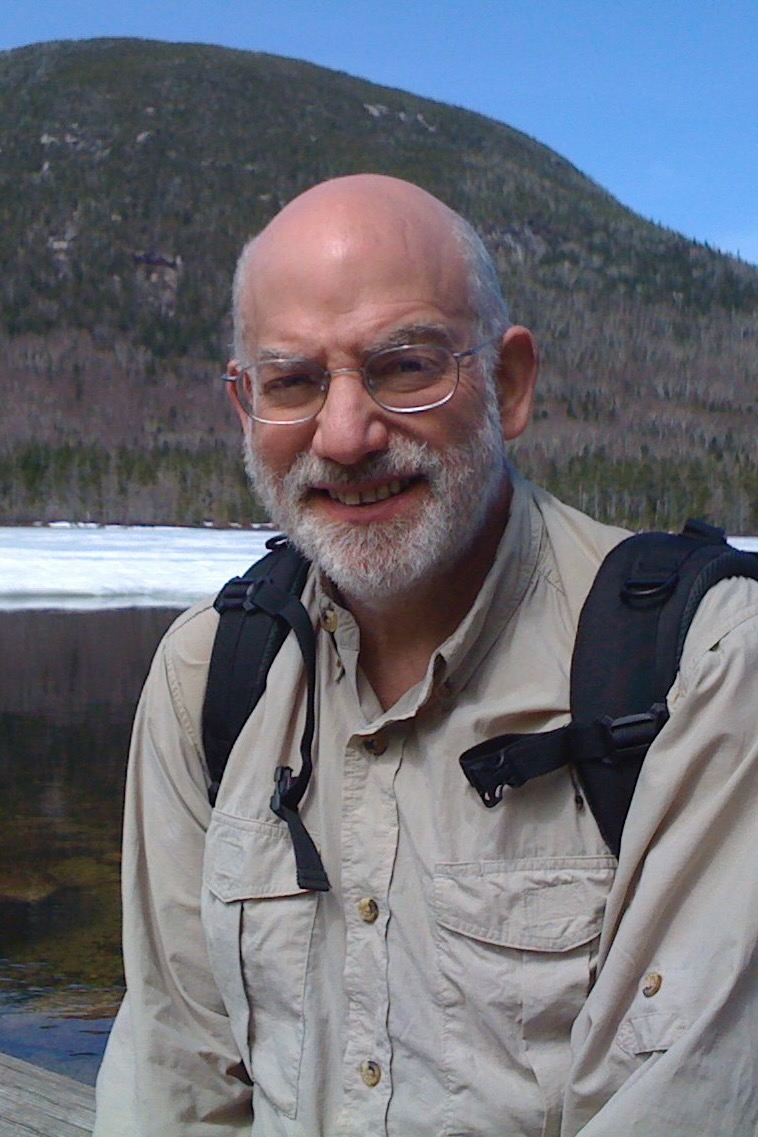
- (b.) 1947 November 15
Bio/Description
One of the founders of algorithmic information theory and a key figure in metamathematics, Chaitin is an Argentine-American mathematician and computer scientist born in Argentina. Beginning in the late 1960s, he made contributions to algorithmic information theory and metamathematics, in particular a computer-theoretic result equivalent to Gödel's incompleteness theorem. He is considered to be one of the founders of what is today known as Kolmogorov (or Kolmogorov-Chaitin) complexity together with Andrei Kolmogorov and Ray Solomonoff.
Algorithmic information theory is a common subject in any computer science curricula. It is a subfield of information theory and computer science that concerns itself with the relationship between computation and information. Chaitin is quoted as saying it is, "the result of putting Shannon's information theory and Turing's computability theory into a cocktail shaker and shaking vigorously."
He attended the Bronx High School of Science and City College of New York, where he (still in his teens) developed the theory that led to his independent discovery of Kolmogorov complexity. His early work on algorithmic information theory paralleled the earlier work of Kolmogorov. Chaitin also defined Chaitin's constant Ω, a real number whose digits are equidistributed and which is sometimes informally described as an expression of the probability that a random program will halt. Ω has the mathematical property that it is definable but not computable. He was also the originator of using graph coloring to do register allocation in compiling, a process known as Chaitin's algorithm.
He has served as a researcher at IBM's Thomas J. Watson Research Center in New York and has remained an emeritus researcher. Chaitin has also written about philosophy, especially metaphysics and philosophy of mathematics, particularly about epistemological matters in mathematics. He has become interested in questions of metabiology and information-theoretic formalizations of the theory of evolution.
In metaphysics, he has claimed that algorithmic information theory is the key to solving problems in the field of biology — obtaining a formal definition of 'life', its origin and evolution — and neuroscience, including the problem of consciousness and the study of the mind. In recent writings, he has defended a position known as digital philosophy. In the epistemology of mathematics, Chaitin has claimed that his findings in mathematical logic and algorithmic information theory show there are "mathematical facts that are true for no reason, they're true by accident. They are random mathematical facts." He has proposed that mathematicians must abandon any hope of proving those mathematical facts and adopt a quasi-empirical methodology.
In 1995 he was given the degree of Doctor of Science honoris causa by the University of Maine. In 2002 he was given the title of honorary Professor by the University of Buenos Aires in Argentina, where his parents were born and where he spent part of his youth. In 2007 Chaitin was given a Leibniz Medal by Wolfram Research, and in 2009 he was given the degree of Doctor of Philosophy honoris causa by the National University of Córdoba. He has served as a Professor at the Federal University of Rio de Janeiro. He has also been a member of the Académie Internationale de Philosophie des Sciences (Brussels) and the Leibniz-Sozietät der Wissenschaften (Berlin).
Some philosophers and logicians strongly disagreed with the philosophical conclusions that Chaitin drew from his theorems. The logician Torkel Franzén criticized his interpretation of Gödel's incompleteness theorem and the alleged explanation for it that his work represented. He wrote more than 10 book titles that were translated into about 15 languages, among which are: Information, Randomness & Incompleteness (World Scientific 1987); Algorithmic Information Theory (Cambridge University Press 1987); Meta Math!: The Quest for Omega (Pantheon Books 2005) (reprinted in UK as Meta Maths: The Quest for Omega, Atlantic Books 2006) (arXiv preprint); and Mathematics, Complexity and Philosophy (Editorial Midas 2011).
Citations:
-
Date of Birth:
1947 November 15 -
Gender:
Male -
Noted For:
Early contributor to algorithmic information theory and metamathematics, which is today, a common subject in any computer science curricula -
Category of Achievement: