
Harvey G. Cragon

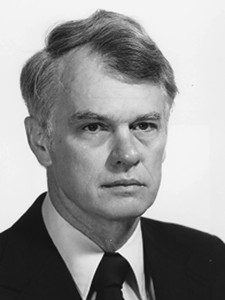
- (b.) 1929
Bio/Description
Designer and builder of the first digital computer with Integrated Circuits (IC) and the first TTL computer, Cragon is recognized as a pioneering American computer engineer. Born in Ruston, Louisiana, he studied Electrical Engineering at Louisiana Tech University in Ruston, graduating in 1950. He then worked for a telephone company in New Orleans and served in the U.S. Army for two years in a tank unit that tested infrared night vision devices in the Mojave Desert during the Korean War.
In 1953 he joined Hughes Aircraft in the Los Angeles, California area, where he worked on automated air defense. This was his entry into the field of digital computers — he took some courses at the University of California, Los Angeles (UCLA) — and in 1957 he moved to Tennessee, where Cragon worked as an engineer in digital instrumentation in a wind tunnel at Arnold Engineering Development Center in Tullahoma USAF with the UNIVAC 1102 computer, designed especially for them. In 1959 he joined Texas Instruments, Inc. (TI) in Dallas, Texas, to work in digital technology and signal processors for seismic data (programmed with plug-in boards).
While there, he built the first digital computer using Integrated Circuits (IC) built by Jack Kilby for the U.S. Air Force in 1961, and similar digital central processing units for measuring instruments on rockets (for James Van Allen in 1963 and 1964) and the military. The use of ICs still encountered resistance, in particular by circuit designers. The breakthrough at TI came with the proof of the benefits of the then-current TTL in a signal processor for seismic data (TI-870) in the mid-1960s, and the construction of the successor to a transistor computer for seismic data processing (TI-AC) with ICs.
The project on the TI Advanced Scientific Computer (ASC) started in 1965. It was also built with ECL, since TTL was not fast enough, and the main problem was the cooling of the processor. The ASC was intended to make TI the leading competitor to the CDC 7600 by Seymour Cray, and drew on ideas from the CDC 6600, also from Cray. The first ASC was delivered in 1970 to Royal Dutch Shell in the Netherlands and was produced until 1985. The machine had vector computer properties and could use them partially alongside the ILLIAC 4 parallel computer.
At the end of the 1970s, Cragon pushed the development of the TMS 320 signal processor, which came out in 1983. In 1984, after 25 years, he left TI to teach at the University of Texas at Austin. In retirement, he has engaged with computer history — including the Colossus, the Norden Bombsight, and the torpedo data computer used for torpedo steering in U.S. submarines during the Second World War.
In 1984 he received the IEEE Emanuel R. Piore Award, and in 1986 he received the Eckert-Mauchly Award, "For major contributions to computer architecture and for pioneering the application of integrated circuits for computer purposes and for serving as architect of the Texas Instruments scientific computer and for playing a leading role in many other computing developments in that company." Cragon is also noted for major contributions made during his years at Texas Instruments. He has been a member of the National Academy of Engineering, the IEEE Computer Society, the Association for Computing Machinery (ACM), and the Charles Babbage Institute.
Citations:
-
Date of Birth:
1929 -
Gender:
Male -
Noted For:
Designer and builder of the first digital computer with Integrated Circuits (IC) and the first TTL computer -
Category of Achievement: