
Robert (Bob) Melancton Metcalfe

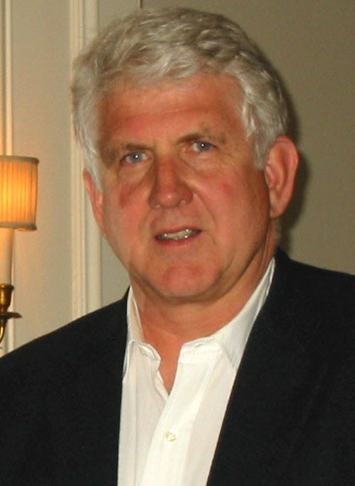
- (b.) 1946 April 07
Bio/Description
Bob Metcalfe is most famous for his co-invention of the Ethernet in the 1970s as Xerox. He also made the statement that the value of a network is roughly proportional to the to the number of nodes on the network squared, this became known as Metcalfe's law. He contributed to the computer industry as an executive, columnist, venture capitalist, professor and research consultant. He has received numerous awards recognizing his accomplishments and in 2022 receive the ACM A. M. Turing for the invention, standardization, and commercialization of Ethernet.
Born in Brooklyn, New York, Bob Metcalfe grew up in Bayshore, Long Island and graduated Bayshore High School. He completed 5 years of study at MIT in 1969 earning bachelor degrees in electrical engineering and management. He was also captain of the MIT tennis team. He did computer work for Raytheon during his undergraduate years. He did a Master's (1970) and a PhD in Applied Mathematics (1973) at Harvard. His doctoral dissertation was on computer networking. During his graduate years he was also working on MIT's Project MAC research into computer-timesharing and on the early ARPAnet. Starting in 1972, before his finishing his doctorate, he worked for Xerox and created the Ethernet as a way to locally network the numerous desktop computers at Xerox offices. In 1979 he founded 3Com which became a successful commercial provider of network infrastructure. In 1989 he left 3Com and became publisher and a columnist at InfoWorld, writing a popular regular column for the magazine through the 1990s. In 2001 he changed careers again becoming a partner at Polaris Partners venture capital firm. In 2011 he changed careers again becoming professor of innovation and entrepreneurship at the University of Texas, retiring in 2022. In 2022 he was working as a research affiliate in computational engineering at MIT.
Metcalfe's greatest single contribution to IT was his co-invention of the Ethernet. His co-inventor David Boggs was responsible for implementing much of the hardware on the system. Metcalfe worked with Boggs starting in 1973 at Xerox to build a local network for Xerox workstation computers that were coming on-line. Metcalfe's ideas for how to manage many transmissions over a single coaxial cable were inspired in part by reading in 1972 about the Hawaii ALOHAnet that networked computer over the radio waves using a single channel. ALOHAnet resolved conflicting (overlapping) transmissions by having sender's retransmit at random intervals when interference occurred. Metcalfe's PhD thesis had initially been rejected in 1972, but the final accepted version included mathematical analysis of the implications of the ALOHAnet's retransmission procedures. This idea became integral to Metcalfe's ideas for the Xerox local network. The ether in Ethernet refers to the anachronistic 19th century concept of an ether, an invisible medium pervading space, that carries radio waves. The ether is what carries the network traffic. Metcalfe continued to maintain the system at Xerox until 1979. In 1979 Metcalfe and Gordon Bell at DEC helped make Ethernet the common local network standard of Xerox, DEC and Intel paving the way for it to become an open industry standard (IEEE 802.3). At 3Com Metcalfe helped develop products like the EtherLink card for IBM PCs that were a part of Ethernet's commercial viability, among his colleagues there Metcalfe credits Robert C. Crane in particular for his contributions.
Citations:
-
Date of Birth:
1946 April 07 -
Gender:
Male -
Noted For:
Co-invented Ethernet and founder of 3Com -
Category of Achievement: