
Robert (Bob) Proebsting

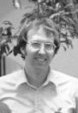
- (b.) 1937
Bio/Description
Inventor of DRAM address multiplexing with the MK4096 4096 X 1 bit DRAM introduced in 1973, Proebsting co-founded Mostek in June 1969 and made one of the most significant contributions in DRAM history.
Born in Chicago, he grew up in Park Ridge, Illinois. He was interested in electronics at a young age and, although it was a hobby throughout high school and college, he was able to attend Knox College in Galesburg, Illinois on a full scholarship as a result of winning a college-level physics exam. Proebsting later earned his Master's degree, also from Knox, and then attended the University of Wisconsin, graduating with a PhD in Electrical Engineering in 1967.
After graduation, he joined Texas Instruments, where he developed a MOS keyboard encoder for Microswitch and a 60 nS PMOS 256 bit static RAM. He co-founded Mostek in June 1969. The development of their first product was a control IC for Burroughs' Panaplex display.
At Mostek, Proebsting invented DRAM address multiplexing with the MK4096 4096 X 1 bit DRAM introduced in 1973. Address multiplexing was a revolutionary approach which reduced cost and board space by fitting a 4K DRAM into a 16 pin package, while competitors took the evolutionary approach which led to a bulky and relatively expensive 22 pin package. Competitors derided the Mostek approach as unnecessarily complex, but he understood that the future roadmap for DRAM memories would benefit greatly if only one new pin were needed for every 4X increase in memory size, instead of the two pins per 4X required by the evolutionary approach.
Computer manufacturers found address multiplexing to be a compelling feature as they saw that a future 64Kb DRAM chip would save 8 pins if implemented with address multiplexing, with subsequent generations saving even more. Per pin costs are a major cost driver in integrated circuits, and the multiplexed approach also used less silicon area, which reduces chip cost exponentially. The MK4096 was produced using an NMOS aluminum-gate process with an added interconnect layer of polysilicon, dubbed the SPIN process. The fear, uncertainty, and doubt put up by the competition regarding address multiplexing was dispelled by the actual performance of the MK4096, which proved solid and robust in all types of computer memory designs.
In 1976, Mostek introduced the silicon-gate MK4027 — an improved version of the metal-gated MK4096 — and the new MK4116 16kb double-poly silicon-gate DRAM. These were designed by Paul Schroeder, who later left Mostek to co-found Inmos. From this point until the late 1970s, Mostek was a continual leader in the DRAM field, holding as much as 85% of the world market for DRAM. The MK4027 and MK4116 were reverse-engineered by Mosaid and successfully cloned by many companies.
In 1979, soon after its market peak, Mostek was purchased by United Technologies Corporation for $345M. In 1985, after several years of red ink and declining market share, UTC sold Mostek for $71M to the French electronics firm Thomson SA, later part of STMicroelectronics. Mostek's intellectual property portfolio, which included rights to the Intel x86 microprocessor family as well as many foundational patents in DRAM technology, provided a large windfall of royalty payments for STMicroelectronics in the 1990s.
Proebsting left Mostek in 1985 and joined Fairchild in Puyallup, Washington. He later moved to the Clipper division in Silicon Valley, California, where he designed cache memory for the embedded Clipper chip. Shortly after he joined the Clipper group, Fairchild was bought by National, but Fairchild's customer Intergraph purchased the Clipper division. Proebsting remained with the Clipper group for the remainder of his time there, designing cache memory.
He has subsequently worked as a consultant on patent lawsuits and has performed design work with Sun on a supercomputer for DARPA, focusing primarily on chip-to-chip interface and high-speed communication. He holds several patents for his work.
Citations:
-
Date of Birth:
1937 -
Gender:
Male -
Noted For:
Inventor of the DRAM address multiplexing with the MK4096 4096 X 1 bit DRAM introduced in 1973 -
Category of Achievement: