Wesley Allison Clark
Honor Roll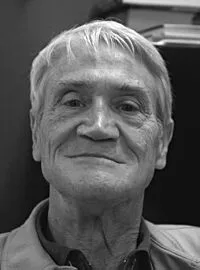
One of the main participants, along with Charles Molnar, in the creation of the LINC laboratory computer — the first mini-computer and one of the inspirations for the personal computer — Clark was a pioneering computer scientist. Clark graduated from the University of California, Berkeley in 1947, and received an electrical engineering degree from MIT in 1955. He worked for Washington University from 1964–72, and as a consultant thereafter. He founded Clark, Rockoff, and Associates in Brooklyn, New York, with his wife, Maxine Rockoff.
According to the New York Times in an article on August 19, 2001, "How the Computer Became Personal": "Work started on the Linc, the brainchild of the M.I.T. physicist Wesley A. Clark, in May 1961, and the machine was used for the first time at the National Institute of Mental Health in Bethesda, MD. Lincs sold for about $43,000—a bargain at the time—and were ultimately made commercially by Digital Equipment, the first minicomputer company. Fifty Lincs of the original design were built."
Clark had a small, but key role in the planning for the ARPANET (the predecessor to the Internet). In 1967, he suggested to Larry Roberts the idea of using separate small computers (later named Interface Message Processors) as a way of standardizing the network interface and reducing load on the local computers. In 1981 he received the Eckert-Mauchly Award for his work on computer architecture. He was elected to the National Academy of Engineering in 1999.
Citations: