
Raymond (Ray) Kurzweil

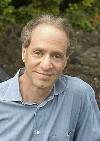
-
(b.) - ?1948 February 12
Bio/Description
Inventor and developer of Optical Character Recognition (OCR), Text-To-Speech Synthesis, Speech Recognition technology, and electronic keyboard instruments, Kurzweil is an American author, inventor, and futurist. He grew up in the New York City borough of Queens, born to secular Jewish parents who had escaped Austria just before the onset of World War II. Kurzweil was exposed via Unitarian Universalism to a diversity of religious faiths during his upbringing. His father was a musician and composer, his mother was a visual artist, and his uncle, an engineer at Bell Labs, taught him the basics of computer science at a young age.
He has been an avid reader of science fiction literature, and in 1963, at age fifteen, he wrote his first computer program. Later in high school, Kurzweil created a pattern-recognition software program that analyzed the works of classical composers and then synthesized its own songs in similar styles. In 1965, he was invited to appear on the CBS television program I've Got a Secret, where he performed a piano piece composed by a computer he had also built. Later that year, he won first prize in the International Science Fair for the invention; he was also recognized by the Westinghouse Talent Search and was personally congratulated by President Lyndon B. Johnson during a White House ceremony.
In 1968, during his sophomore year at MIT, he started a company that used a computer program to match high school students with colleges. The program, called the Select College Consulting Program, was designed by him and compared thousands of different criteria about each college with questionnaire answers submitted by each student applicant. Around this time, Kurzweil sold the company to Harcourt, Brace & World for $100,000 plus royalties. He obtained a Bachelor of Science degree in Computer Science and Literature in 1970 from MIT.
In 1974, he started the company Kurzweil Computer Products, Inc. and led development of the first omni-font optical character recognition system—a computer program capable of recognizing text written in any normal font. Before that time, scanners had only been able to read text written in a few fonts. He decided that the best application of this technology would be to create a reading machine, which would allow blind people to understand written text by having a computer read it to them aloud. However, this device required the invention of two enabling technologies—the CCD flatbed scanner and the text-to-speech synthesizer.
Development of these technologies was completed at other institutions such as Bell Labs, and on January 13, 1976, the finished product was unveiled during a news conference headed by Kurzweil and the leaders of the National Federation of the Blind. Called the Kurzweil Reading Machine, the device covered an entire tabletop. It gained him mainstream recognition: on the day of the machine's unveiling, Walter Cronkite used the machine to give his signature soundoff, "And that's the way it is, January 13, 1976."
His next major business venture began in 1978, when Kurzweil Computer Products began selling a commercial version of the optical character recognition computer program. LexisNexis was one of the first customers and bought the program to upload paper legal and news documents onto its nascent online databases. He sold his company to Lernout & Hauspie. Following the bankruptcy of the latter, the system became a subsidiary of Xerox, formerly known as Scansoft and now as Nuance Communications, and Kurzweil functioned as a consultant for the former until 1995.
While listening to The Today Show, musician Stevie Wonder heard a demonstration of the device and purchased the first production version of the Kurzweil Reading Machine, beginning a lifelong friendship between the two men. After a 1982 meeting with Stevie Wonder, in which the latter lamented the divide in capabilities and qualities between electronic synthesizers and traditional musical instruments, he was inspired to create a new generation of music synthesizers capable of accurately duplicating the sounds of real instruments. Kurzweil Music Systems was founded in the same year, and in 1984, the Kurzweil K250 was unveiled.
The K250 was capable of imitating a number of instruments, and in tests musicians were unable to discern the difference between the Kurzweil K250 on piano mode and a normal grand piano. The recording and mixing abilities of the machine, coupled with its abilities to imitate different instruments, made it possible for a single user to compose and play an entire orchestral piece. Kurzweil Music Systems was sold to Korean musical instrument manufacturer Young Chang in 1990, and as with Xerox, he remained as a consultant for several years. Hyundai acquired Young Chang in 2006 and in January 2007 appointed Kurzweil as Chief Strategy Officer of Kurzweil Music Systems.
Concurrent with Kurzweil Music Systems, he created the company Kurzweil Applied Intelligence (KAI) to develop computer speech recognition systems for commercial use. The first product, which debuted in 1987, was an early speech recognition program. He started Kurzweil Educational Systems in 1996 to develop new pattern-recognition-based computer technologies to help people with disabilities such as blindness, dyslexia, and ADD in school. Products included the Kurzweil 1000 Text-To-Speech Converter Software Program, which enabled a computer to read electronic and scanned text aloud to blind or visually impaired users, and the Kurzweil 3000 program, a multifaceted electronic learning system that helps with reading, writing, and study skills.
During the 1990s he founded the Medical Learning Company, whose products included an interactive computer education program for doctors and a computer-simulated patient. Around the same time, Kurzweil started KurzweilCyberArt.com—a website featuring computer programs to assist the creative art process. The site used to offer free downloads of a program called AARON—a visual art synthesizer developed by Harold Cohen—and of "Kurzweil's Cybernetic Poet," which automatically creates poetry. During this period he also started KurzweilAI.net, a website devoted to showcasing news of scientific developments, publicizing the ideas of high-tech thinkers and critics alike, and promoting futurist-related discussion among the general population through the Mind-X forum.
In 1999, he created a hedge fund called "FatKat" (Financial Accelerating Transactions from Kurzweil Adaptive Technologies), which began trading in 2006. He stated that the ultimate aim was to improve the performance of FatKat's A.I. investment software program, enhancing its ability to recognize patterns in "currency fluctuations and stock-ownership trends." Kurzweil predicted in his 1999 book, The Age of Spiritual Machines, that computers will one day prove superior to the best human financial minds at making profitable investment decisions.
In June 2005, he introduced the "Kurzweil-National Federation of the Blind Reader" (K-NFB Reader)—a pocket-sized device consisting of a digital camera and computer unit. Like the Kurzweil Reading Machine of almost 30 years before, the K-NFB Reader is designed to aid blind people by reading written text aloud. The newer machine is portable and scans text through digital camera images, while the older machine is large and scans text through flatbed scanning.
He made a movie called "The Singularity Is Near: A True Story About the Future" in 2010, based in part on his 2005 book, "The Singularity Is Near." Part fiction, part non-fiction, he interviewed 20 big thinkers like Marvin Minsky; the film also featured a narrative storyline illustrating some of its ideas, in which a computer avatar named Ramona saves the world from self-replicating microscopic robots. In addition, an independent feature-length documentary about his life and ideas called "Transcendent Man" premiered in 2009 at the Tribeca Film Festival. Filmmakers Barry Ptolemy and Felicia Ptolemy followed Kurzweil on his global speaking tour, documenting his quest to reveal mankind's ultimate destiny and his stated goal of bringing back his late father using AI. The film explored many of the ideas found in his New York Times bestselling book, "The Singularity Is Near," including his concept of exponential growth, radical life expansion, and transcending human biology, and also featured critics who argued against his predictions.
In 2010, an independent documentary film called "Plug & Pray" premiered at the Seattle International Film Festival, in which he and one of his major critics, the late Joseph Weizenbaum, argued about the benefits of eternal life. He has frequently commented on the application of cell-size nanotechnology to the workings of the human brain and how this could be applied to building AI. While being interviewed for a February 2009 issue of Rolling Stone magazine, Kurzweil expressed a desire to construct a genetic copy of his late father, Fredric Kurzweil, from DNA within his grave site. This feat would be achieved by exhumation and extraction of DNA, constructing a clone of Fredric, and retrieving memories and recollections—from his own mind—of his father.
In December 2012, he joined Google in a full-time position to "work on new projects involving machine learning and language processing." He received the 1999 National Medal of Technology and Innovation, the nation's highest honor in technology, from President Clinton in a White House ceremony. Kurzweil was the recipient of the $500,000 Lemelson-MIT Prize for 2001, the world's largest for innovation, and in 2002 he was inducted into the National Inventors Hall of Fame, established by the U.S. Patent Office. He received nineteen honorary doctorates and honors from three U.S. presidents.
He is the author of several books on health, artificial intelligence (AI), transhumanism, the technological singularity, and futurism. Kurzweil is generally recognized as a public advocate for the futurist and transhumanist movements, due to his stances on life extension technologies, his efforts to forecast future advances in technology, and his interest in the concept of the technological singularity. At the same time, he has attracted significant criticism from scientists and thinkers. "The Age of Spiritual Machines" has been translated into 9 languages and was the number-one best-selling book on Amazon in science. His book "The Singularity Is Near" was a New York Times bestseller and has been the number-one book on Amazon in both science and philosophy.
"Transcend: Nine Steps to Living Well Forever," a follow-up to "Fantastic Voyage," was released on April 28, 2009. His subsequent bestseller, released on November 13, 2012, "How to Create a Mind: The Secret of Human Thought Revealed," describes his Pattern Recognition Theory of Mind—the theory that the neocortex is a hierarchical system of pattern recognizers—and details how duplicating this architecture in machines could lead to an artificial superintelligence. KurzweilAI.net attracted over two million readers annually. He has also been writing a novel called "Danielle," about his imaginary superheroine daughter who solves problems through intelligence.
He has spoken widely to audiences public and private and has been a routine keynote speaker at notable industry conferences like DEMO, SXSW, and TED. Coverage of his public speaking and print and media appearances has been cataloged on his website. He has been described as a "restless genius" by The Wall Street Journal and "the ultimate thinking machine" by Forbes. PBS included Kurzweil as one of 16 "revolutionaries who made America," along with other inventors of the past two centuries, and Inc. magazine ranked him number eight among the "most fascinating" entrepreneurs in the United States, calling him "Edison's rightful heir."
-
Date of Birth:
1948 February 12 -
Gender:
Male -
Noted For:
Inventor and developer of such technology as Optical Character Recognition (OCR), Text-To-Speech Synthesis, Speech Recognition technology, and electronic keyboard instruments -
Category of Achievement:
-
More Info: